Christmas tree species; a plain guide to what grows on American farms
Every species has strengths and honest tradeoffs; here is what you should know before you drive to the farm.
The wrong tree for the room ends up with drooping limbs and heirloom ornaments on the floor by the second week of December; the right tree lasts through New Year and still smells like the farm on the morning it comes down. This guide covers the species you will actually see on choose-and-cut farms in the United States. Read the notes, then use the farm directory to find a farm nearby that grows the species you want.
Fraser fir
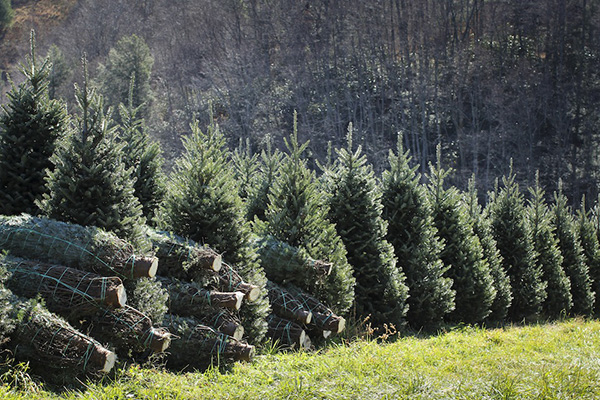
Fraser fir is the flagship of most East Coast farms and the tree that hangs at the White House more often than any other species. Branches are strong enough to hold heavy glass without sagging; needles are short and soft with a silvery underside that catches string lights. Needle retention is among the best of any species when the reservoir stays full; the fragrance is clean and forest-like.
Best for: Rooms with tall ceilings and families with heavy ornament collections.
Where it grows: Grown mainly in the Appalachian mountains of North Carolina, Virginia, and West Virginia.
Douglas fir
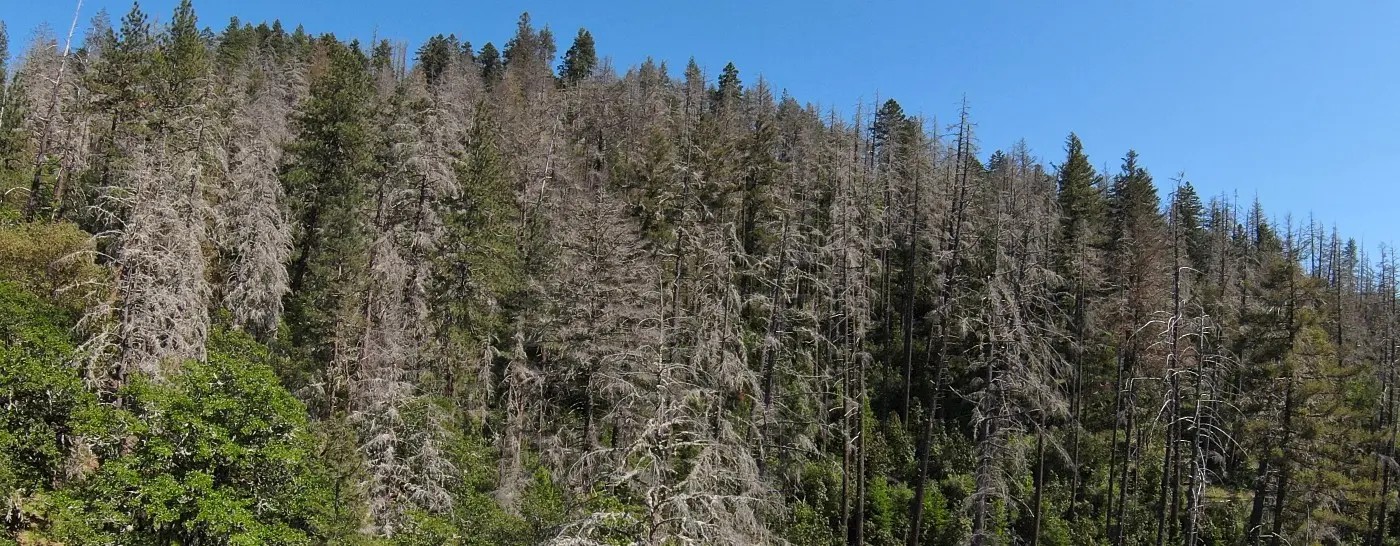
Douglas fir is the West Coast tradition; softer feathery branches, a sweet citrus-pine fragrance that fills a room, and a full pyramid shape that shears cleanly on the farm. Branches bend under weight, so save the blown glass for the trunk side and keep paper and lights on the outer branches.
Best for: Living rooms that want a full pyramid tree and a strong fragrance.
Where it grows: The most common Christmas tree grown in the Pacific Northwest.
Balsam fir
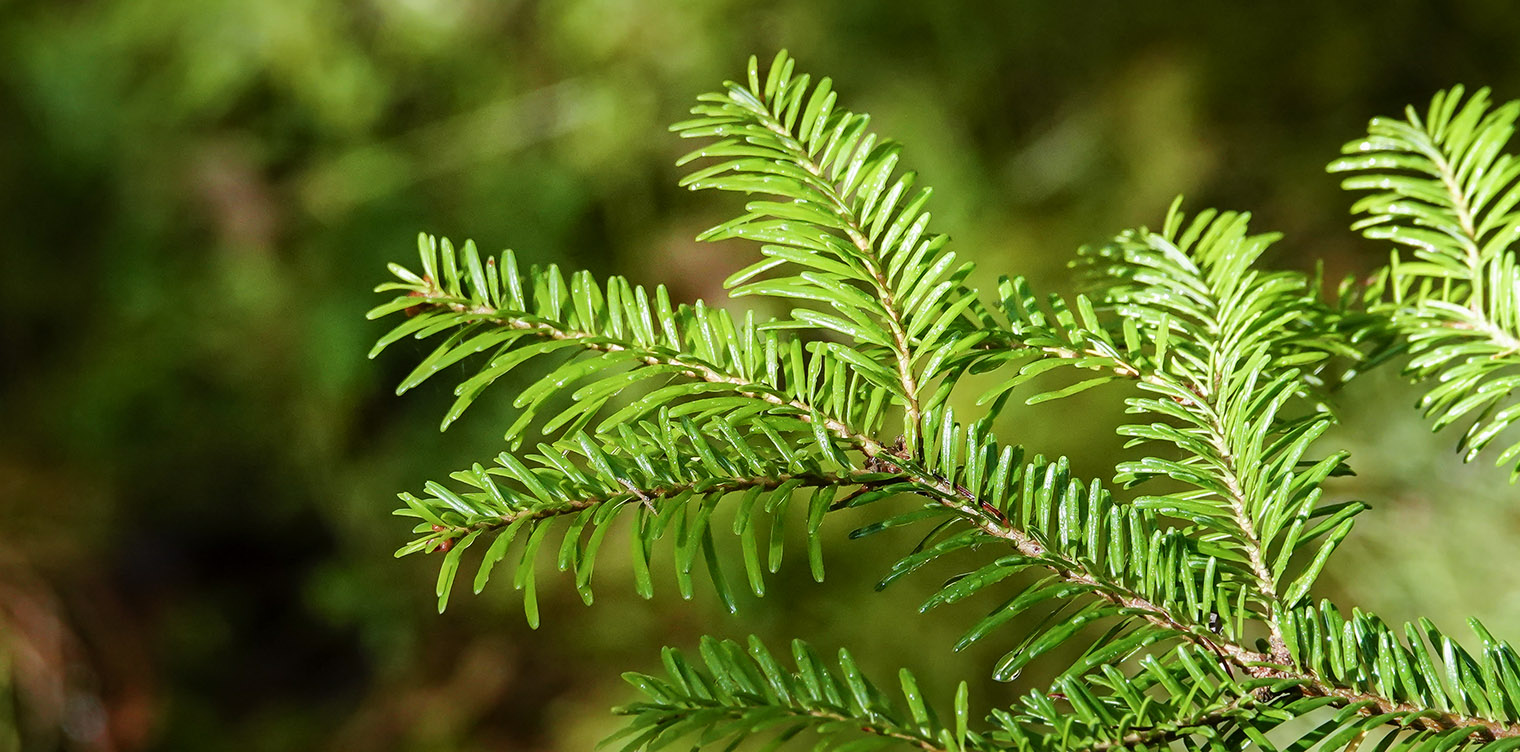
Balsam fir is the New England Christmas smell in the wild; the resin note that fills a small cabin and lingers for weeks. Dense dark green foliage, a narrower silhouette than Fraser, and very good needle retention for the first two weeks if the stand is kept full.
Best for: Small living rooms; families that grew up with a Northeast Christmas smell.
Where it grows: Cool climates from Maine and Vermont through the Adirondacks and Great Lakes.
Noble fir
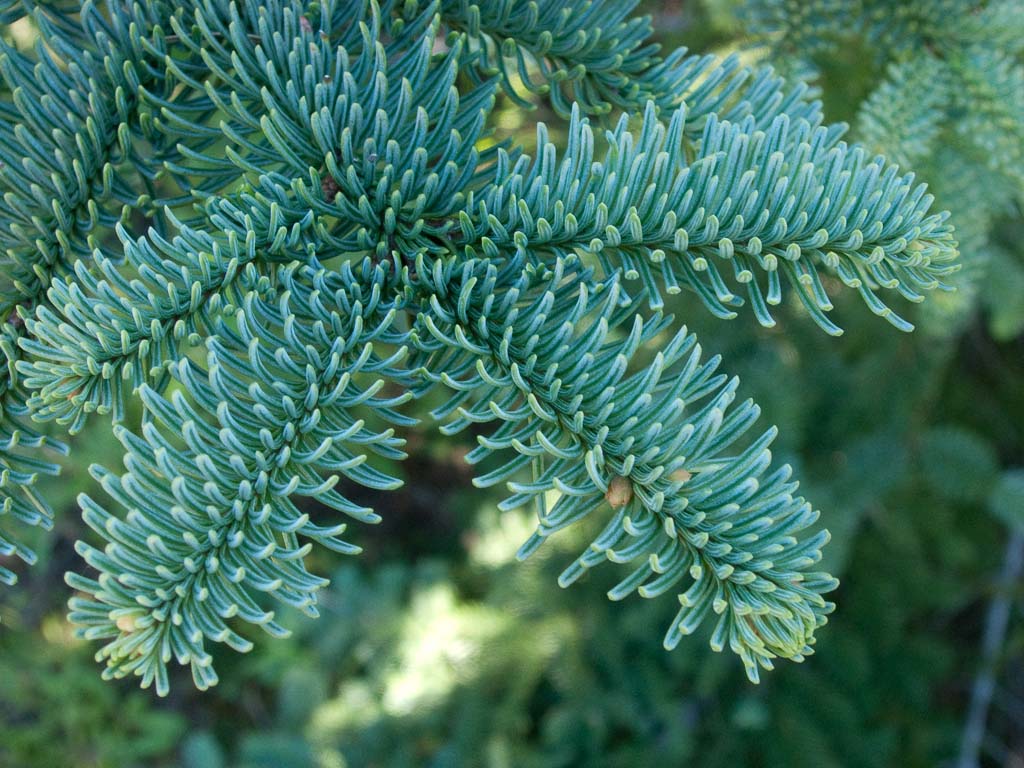
Noble fir is the tree florists reach for when branches need to hold real weight; turned-up needles create clean shelves between the boughs, the silhouette is almost architectural, and needle retention is outstanding.
Best for: Ceramic bells, quilted apples, anything that needs a stable perch.
Where it grows: Grown mostly in Oregon and Washington.
Concolor fir
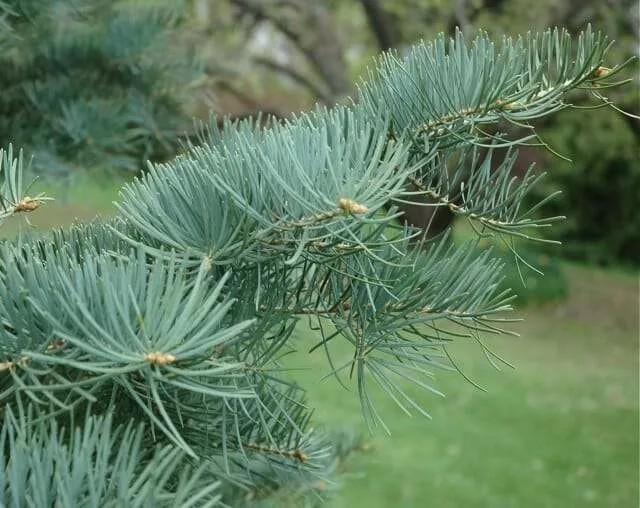
Concolor fir, sometimes called white fir, is a rising favorite; long soft blue-green needles that feel almost like a spruce without the sharpness, and a distinct citrus scent that reminds people of oranges more than pine.
Best for: Families that want the behavior of a Fraser with a scent unlike anything else.
Where it grows: Native to the Rockies; grown commercially in Michigan, Pennsylvania, and the Pacific Northwest.
Grand fir
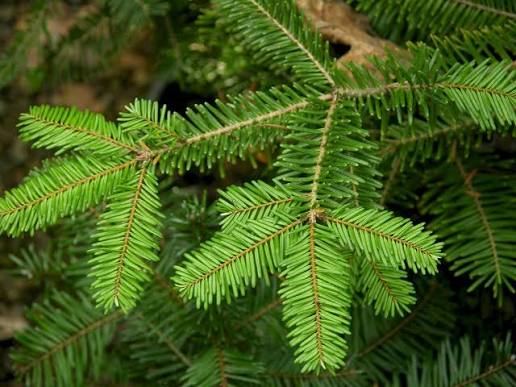
Grand fir has the most fragrant needles of any of the true firs; crush one between your fingers and the room smells like tangerine peel and pine resin. Branches are slender and slightly wispy.
Best for: Lighter ornaments; households that pick a tree first by smell.
Where it grows: Pacific Northwest, from northern California to British Columbia.
Scotch pine
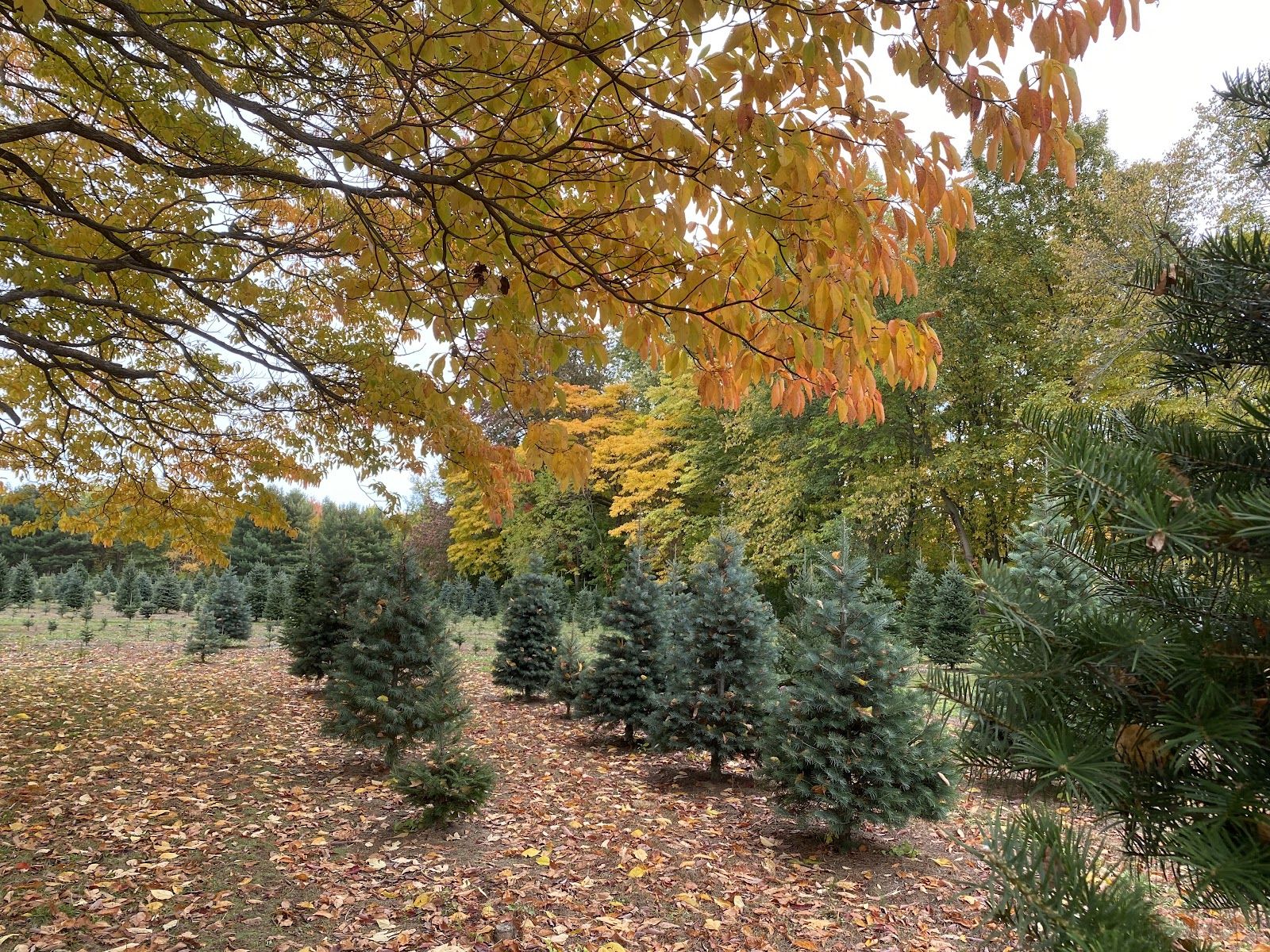
Scotch pine is the most widely grown Christmas tree in the country and the workhorse of many family farms in the Midwest and mid-Atlantic. Long stiff needles hold ornaments securely; needle retention is famously stubborn, even when the reservoir runs dry for a day.
Best for: Families that decorate right after Thanksgiving and keep the tree up through Twelfth Night.
Where it grows: Grown widely across the Midwest and mid-Atlantic.
White pine
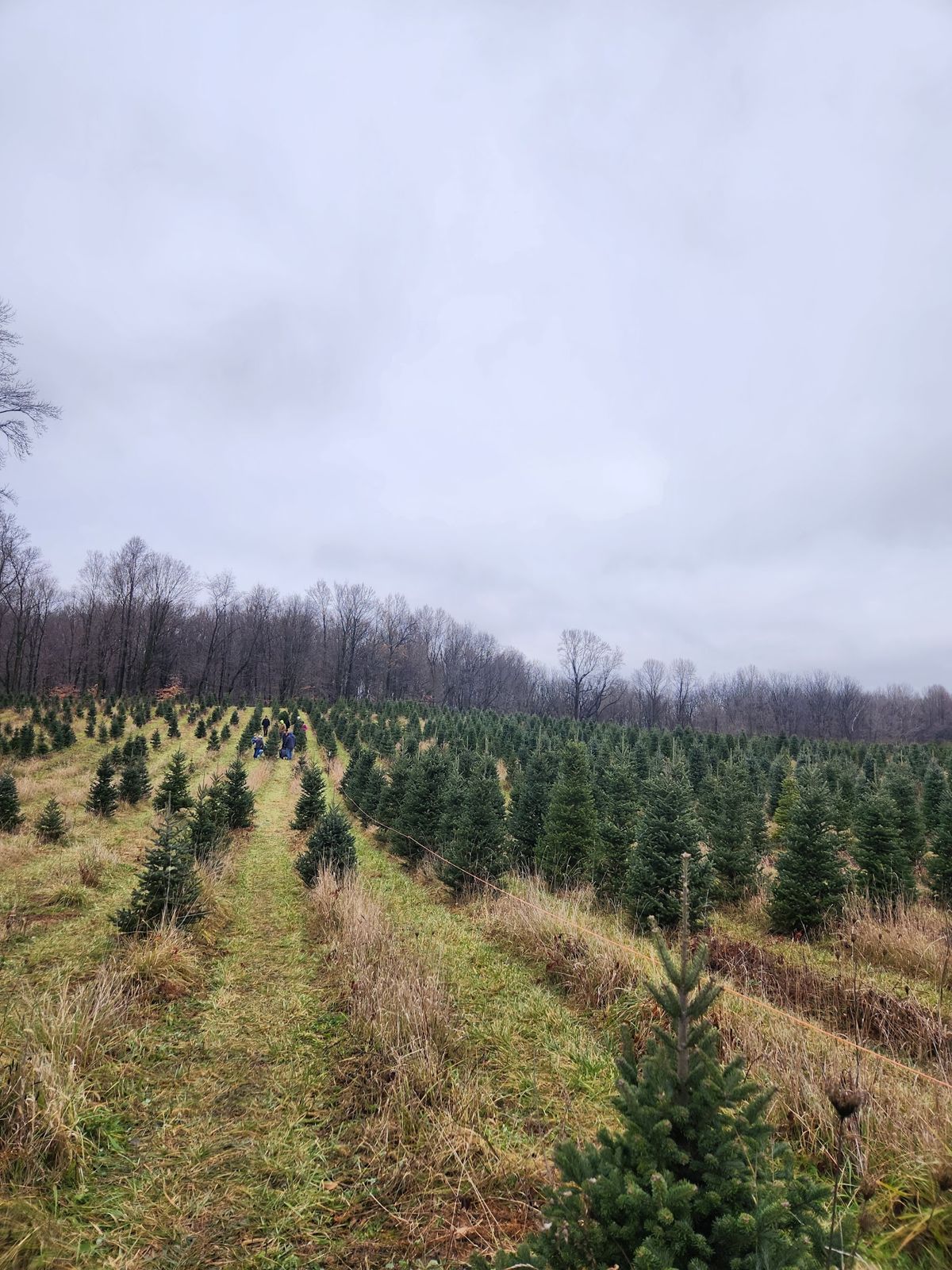
Eastern white pine has soft long needles in bundles of five, a delicate texture that feels closer to a cloud than a fir, and very little fragrance; a good choice for households sensitive to strong evergreen scents.
Best for: Light glass ornaments, ribbons, and lights.
Where it grows: Eastern United States, from the Great Lakes down through Appalachia.
Blue spruce
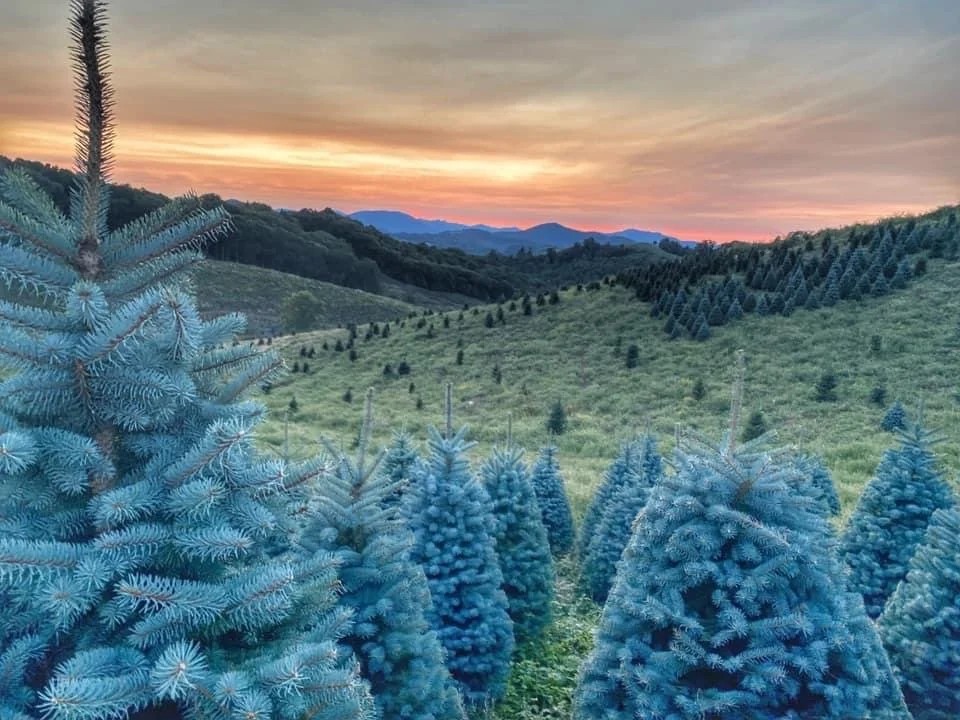
Colorado blue spruce is the tree that looks like a postcard; steel-blue needles, perfect pyramid shape, stiff branches that hold ornaments like small shelves. The tradeoff is honest; spruce needles are prickly and shed faster than any fir.
Best for: Short-cycle decoration; late-cut trees kept cold and wet.
Where it grows: Rocky Mountains; farmed across the Northeast and Midwest.
How to pick the right species for your room
Start with the ornaments; heirloom glass and cast iron want Fraser, Noble, or blue spruce. Delicate paper, felt, and vintage tinsel want white pine, Douglas fir, or Grand fir. Match the fragrance to the size of the room; a Grand fir or Balsam in a small living room fills the space beautifully, and the same species in an open-plan great room can smell perfect from one couch and faint from the other. Consider your cutting date; if you cut the weekend after Thanksgiving, choose Fraser, Noble, or Concolor for the best retention.
Ready to find a farm?
Use Farms Near Me to see the twenty closest farms by driving distance, or browse the full directory. If you are still deciding when to visit, the season calendar maps opening weekends and peak crowds, and the cut-your-own checklist is a printable one-pager you can take to the field.
Questions? Contact us.