The Enduring Tradition of Wreath Making on Family Tree Farms
Published October 28, 2026 · By Christmas Tree Farm Finder

Walk past the retail barn at any northern tree plantation in late November, and the first thing that hits you is not the exhaust of tractors or the smoke from the warming hut. It is the resin scent of crushed conifer needles rising from damp wooden floors; cold sap clings to wool gloves before you even step foot in the grove. In the back corner of the operations yard, behind stacks of hand saws, sits the wreath room. Here, generations of farm families transform lower limbs into holiday centerpieces that welcome visitors home.
The Thrifty Origins of the Farm Wreath
Salvaging the Bottom Branches
Decades before holiday shops packaged front door decor in velvet ribbon, farm families hung wreaths out of plain rural frugality. Field hands pruned the lowest whorl of branches to clear ground clearance for harvest saws; leaving those stout limbs to rot in the weeds felt like throwing money into the brush pile. Trimmings gathered from the cutting field became raw material for the kitchen table, where wire loops and leftover twine turned field waste into holiday cheer.
Winter Income Beyond the Trunk
Selling whole trees provided a single quick payday, but hand-tied wreaths created vital profit margin during lean winter months. A farmer could sell twenty small rings crafted entirely from scrap boughs and cover the fuel bill for the tractor; every clipped branch represented salvage value that cushioned the family ledger. Over time, that supplemental craft evolved into a standalone tradition that keeps seasonal workers employed long after field cutting winds down.
The Anatomy of the Greens Shed
Scent and Sound in the Workhouse
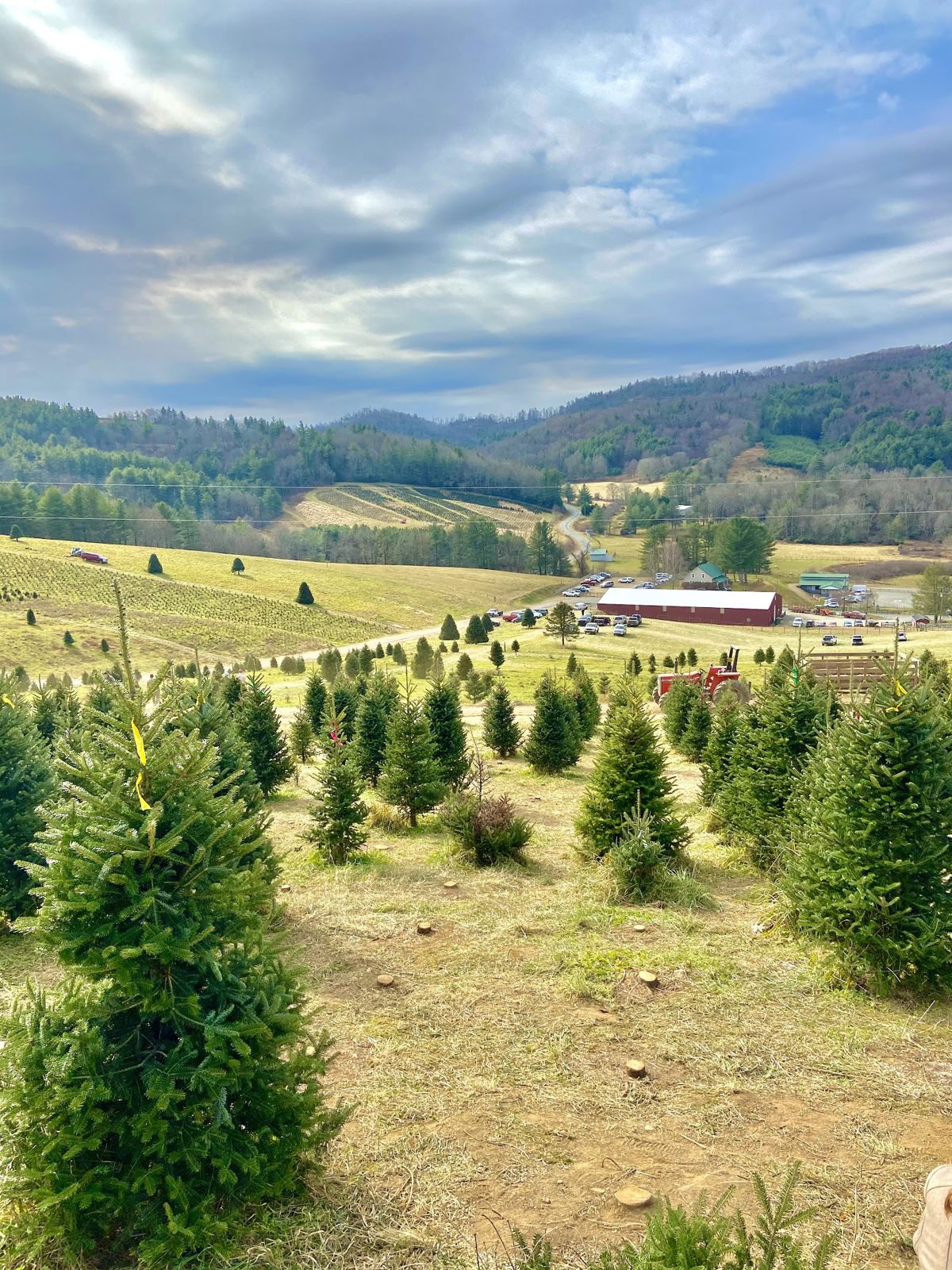
Photo: itsdylanc, Google Maps contributor at Lil' Grandfather Choose and Cut.
Inside the wreath barn, the acoustic profile differs entirely from the quiet hush of open hillside fields. Steel clamps clack rhythmically against wooden benches while heavy pruning shears snap through woody stems; a low hum of chatter carries over radio music playing through dust-coated speakers. The floor stays slick with crushed needles, dropped pinecones and sticky pitch that never quite washes out of canvas work coats.
Tools of the Bench
Experienced wreath makers do not rely on fragile plastic gadgets or decorative glue guns to secure heavy winter boughs. The primary tools are brutal in their simplicity; heavy shears, blunt pliers, wire rings and spools of paddle wire dominate the tabletop. Everything in the shed is built to endure frozen fingers, repetitive physical strain and the abrasive friction of rough conifer bark.
The Foot-Pedal Clamp Machine
The real workhorse of modern farm production is the manual clamp machine, which operates through a mechanical foot pedal and steel jaws. A maker arranges greens inside a metal clip mounted on a steel ring, then steps down with full body weight; the jaws pinch the steel loop closed around the stems with an audible metallic crunch. This simple lever action secures bundles far tighter than human hands can pull, protecting rings against freezing gales.
Spools of Annealed Wire
Older growers still favor traditional hand-wrapping methods using heavy spools of dark annealed wire. The dark metal wire cuts into soft bark without snapping; tension must remain steady as the maker wraps three tight turns around each successive bundle. A skilled tier works entirely by muscular memory, maintaining equal spacing across the circular frame without glancing at a measuring tape.
Selecting Boughs for Resilience and Scent
Fraser Fir as the Backcountry Workhorse
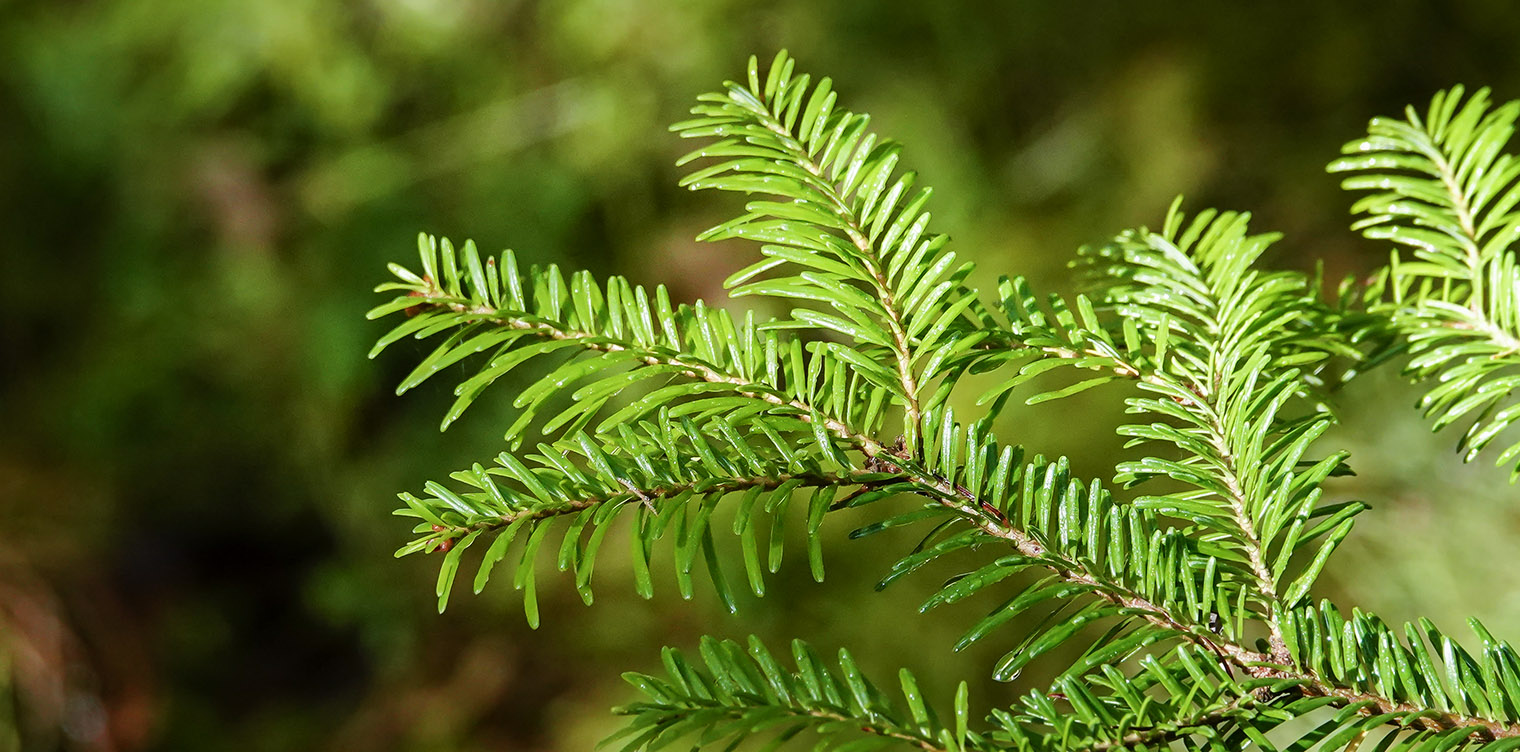
In the Appalachian highlands and across the upper South, Fraser fir reigns as the supreme foundation for door decor. According to our tree species guide, the silver underside of Fraser needles provides visual depth while needle retention remains unmatched in dry indoor entryways. Branches stay limber in subzero weather; they bend across metal frames without splintering or dropping foliage across the carpet.
White Pine for Softness and Texture
Eastern white pine brings a feathery texture that softens the rigid posture of stiff fir needles. Farm workers cut the flexible tips in early morning before frost thaws; these soft clusters fill gaps along the outer perimeter of the wire frame. The long needles sweep backward like plumes, giving the finished ring an informal silhouette that catches winter sunlight.
Balsam Fir and the Fragrance of Memory
Northern growers swear by balsam fir for its intense aromatic oils that release whenever the wood is disturbed. When cold winds strike a porch door, boughs harvested from northern hillside stands broadcast a sharp woodsy perfume across the entire entryway. Balsam needles lie flat along the twig; this natural geometry makes them ideal for building uniform layers along the inner rim of the ring.
Mixing Varieties for Contrast
Master wreath tiers rarely limit themselves to a single evergreen variety on busy production runs. They blend blue spruce tips with dark fir and cedar sprigs; the subtle color variations break up monotonous green fields. The resulting contrast gives the ring an organic complexity that synthetic decorations can never hope to replicate.
The Rhythm of Hand Assembly
Sorting Greens by Size and Bend
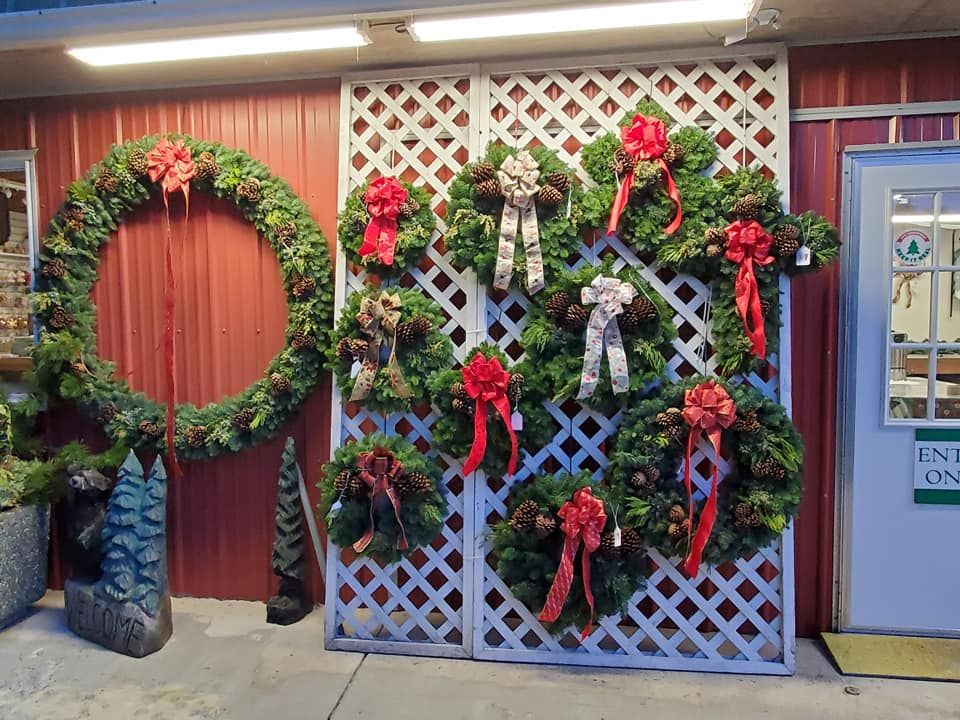
Photo: The Wreath Works, Google Maps contributor at The Wreath Works.
Work begins hours before the first ring is clamped, starting with the laborious sorting of bough piles. Cutters separate slender tips from thick woody stems; heavy wood gets tossed aside because bulky branches distort the circular frame. Bundles of three or four coordinated sprigs are laid in orderly rows on the cedar bench, ready for the maker to grab without hesitation.
Building the Base Fan
Every successful wreath relies on a structural fan that creates depth beneath the showier top greens. The tier selects a broad foundation sprig to anchor the metal ring, then layers softer needles directly across the core. This dense lower bed conceals the metal frame completely; it also acts as a physical cushion that holds moisture against cut stems.
Layering Shingle Style Around the Ring
Assembly proceeds around the metal hoop like cedar shingles nailed across a barn roof. Each successive bundle of branches overlaps the woody stems of the previous grouping, hiding the wire wraps under a skirt of fragrant needles. The worker rotates the circular frame clockwise with one hand while feeding fresh greens with the other; the circular pattern requires absolute consistency in angle and volume.
Tying off the Hidden End
The final bundle presents the true test of a wreath maker's craftsmanship and patience. The worker must lift the delicate tips of the initial bundle without snapping needles, sliding the final wood stems underneath the original layer. Once the last wire loop is pulled tight and twisted off with pliers, the seam vanishes into the continuous green circumference.
Generational Craft and Farm Community
Grandmothers at the Ribbons
While young field hands haul dripping boughs from trucks, older family members often claim the warm finishing station near the woodstove. Working with wired velvet, burlap and floral picks, these matriarchs tie bows with swift loops honed over decades of holiday rushes. Their practiced eyes catch loose stems or asymmetrical patches before finished pieces move out to the display yard.
High School Hands on the Baling Line
Wreath season provides local teenagers with an introduction to physical farm labor and small business culture. You can locate family-run operations using our Farms Near Me portal, where multi-generational crews work shoulder to shoulder in open barns. Young workers learn to grade boughs, lift heavy damp crates and converse with town folks looking for the perfect porch display.
Field Traditions Shared Across Decades
Standards published by the National Christmas Tree Association emphasize sustainability and freshness in American conifer production. That commitment to craft survives through oral tradition, as master makers teach apprentices the subtle differences in resin quality from tree to tree. The skills cannot be learned through diagrams; they require handling thousands of sticky branches under the watchful eye of someone who has worked the benches for fifty years.
Planning the Winter Harvest Run
Timing the Pruning Before the First Hard Freeze
Bough harvest requires precise timing linked directly to autumn temperature drops and tree dormancy. Consult the regional season calendar to see when local growers begin harvesting brush; cutting too early causes needles to dry out before Thanksgiving. Evergreen boughs must endure several nights below freezing before harvest; the cold shock sets the sap and locks the needles securely to the bark.
Storing Boughs Under the Snowline
Once harvested, cut branches sit outdoors under heavy canvas tarps or beneath fresh snowbanks to preserve internal moisture. Warm storage barns sap needles of life within days, turning vibrant foliage brittle and pale. Cold, shaded humidity preserves the forest-fresh scent and keeps the woody stems flexible for the clamping machines.
Preparing the Retail Display
When you browse Christmas tree farms by state, you will notice that northern barns often display wreaths against raw wood siding out of the wind. Exposure to bright winter sunshine degrades cut greens quickly; shaded, open-air racks keep cold air circulating freely through the branches. Farm visitors can smell the cold needles as soon as they walk past the display racks on crisp December mornings.
The Art of Natural Adornment
Cones Gathered from the High Rows
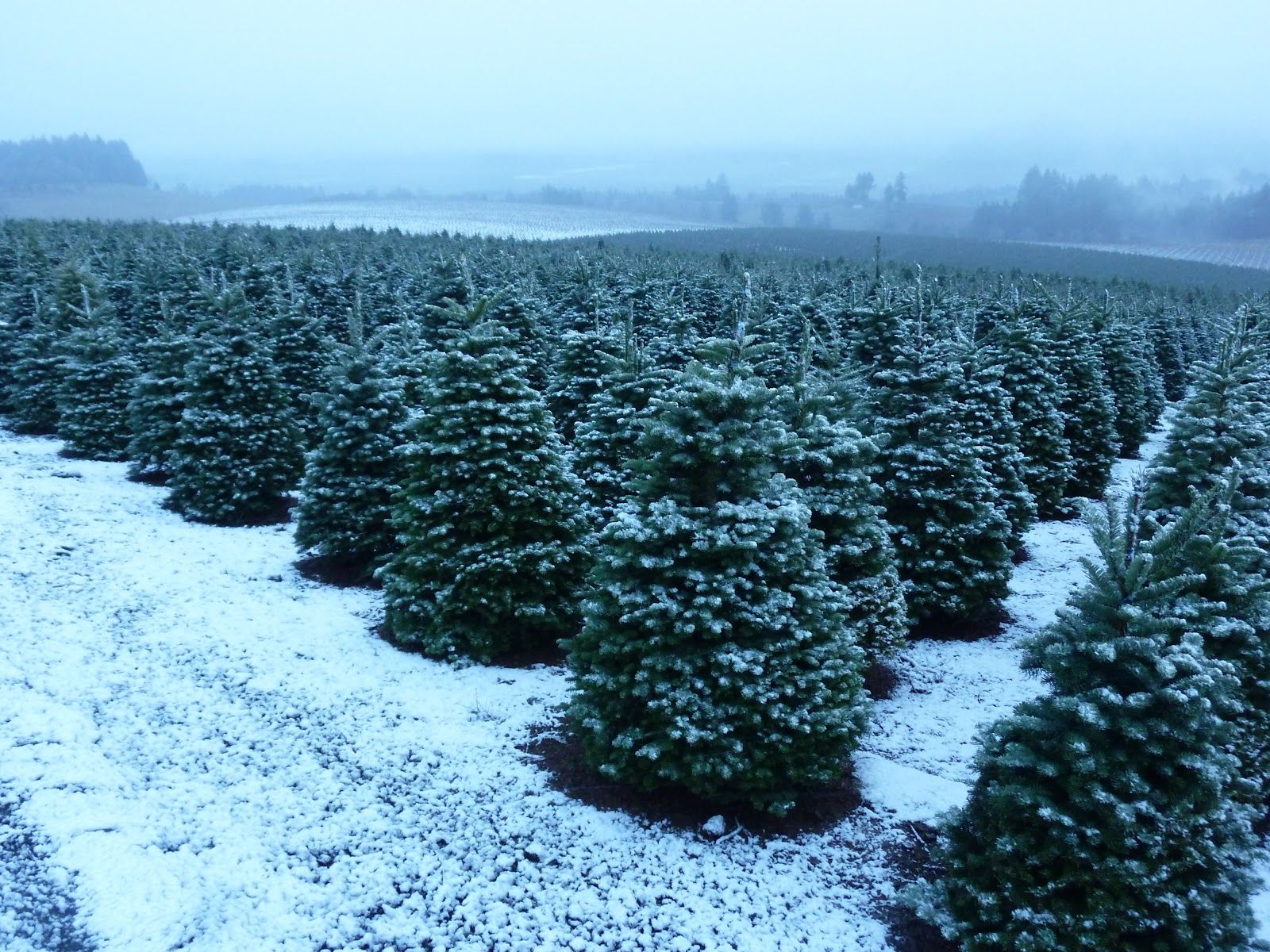
Photo: Noble Mountain Tree Farm- Wholesale Only, Google Maps contributor at Noble Mountain Tree Farm.
Commercial plastic baubles look out of place against hand-clipped boughs, so growers gather accents directly from the timber rows. Workers harvest pinecones from towering windbreak trees in late September; the cones dry in open bins until their scales open into miniature wooden roses. Farm hands wire these cones directly to the metal ring, ensuring they remain anchored through severe winter storms.
Winterberries and Cedar Accents
A quick walk through the hedgerows provides vibrant red winterberry stems, wild rose hips and aromatic cedar foliage. Before packing boots and gloves using our cut-your-own checklist, consider asking your local grower which native plants they blend into their specialty pieces. These foraging accents add color and texture that tell an authentic regional story about the landscape where the wreath was grown.
Extending Life on the Front Door
Cold Weather Placement Strategies
A freshly made farm wreath will easily outlast the winter holiday season if you keep it away from direct afternoon sun. Storm doors create greenhouse conditions that bake cut boughs; hanging the greenery on an open outer porch preserves moisture within the needles. Cold ambient humidity prevents the cut branches from drying out, keeping the foliage supple well into the new year.
Fresh Water Spritzing Rituals
Dry winter breezes strip moisture from evergreen needles, causing sap to crystallize and needles to drop prematurely. Spritzing the back of the wreath with cool water once a week rejuvenates the boughs; cut stems absorb moisture directly through porous bark and needle stomata. This simple five-minute chore maintains that crisp forest perfume across your porch for several weeks.
Returning Greenery to the Soil
When the season ends and needles finally lose their shine, wreaths transition back into natural compost. Learn more about regional tree recycling programs that chip leftover boughs into organic landscape mulch for public parks. The heavy wire frames can be stripped clean with pliers and saved for next winter, completing a closed cycle of simple resourcefulness that began in the orchard soil.